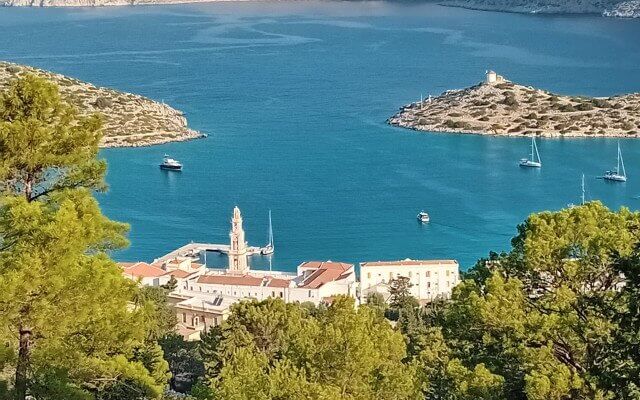

Το 1941 οι Βρετανοί δημιούργησαν την Καταδρομική Υπηρεσία Special Boat Section, που αναλάμβανε αποστολές κομάντο εναντίον των Γερμανών και Ιταλών στην Ανατολική Μεσόγειο συμπεριλαμβανομένης και της Δωδεκανήσου. Μεταξύ αυτών συγκαταλέγεται και η καταδρομή εναντίον της Σύμης τον Ιούλιο του 1944, όπως την περιέγραψε ο Βρετανός κομάντο John Lodwick που πήρε μέρος στην επιχείρηση.
Στις 6 Ιουλίου αναγνωριστική περίπολος υπό τον λοχαγό Stewart Macbeth επέστρεψε από την Σύμη και δυο μέρες αργότερα η επιθετική δύναμη υπό τον ταξίαρχο Turnbull συγκεντρώθηκε στην θαλάσσια περιοχή του Penzil της Τουρκίας. Η δύναμη αποτελείτο από 139 Ιερολοχίτες και 81 Βρετανούς κομάντος με δέκα Motor Launch (αποβατικά) και δυο καΐκια, διαιρεμένη σε τρία τμήματα.
Το Βόρειο και κυριότερο τμήμα υπό τον ταξίαρχο Turnbull και υποδιοικητή τον ταγματάρχη Lapraik επρόκειτο να αποβιβαστεί στον κόλπο της Αγίας Μαρίνας, με στόχο το λιμάνι και την πόλη της Σύμης. Το Δυτικό τμήμα υπό τον λοχαγό Charles Clynes επρόκειτο να αποβιβαστεί στον όρμο Τολί με στόχο τον Άγιο Φανούρη. Και το Νότιο τμήμα υπό τον λοχαγό Stewart Macbeth επρόκειτο να αποβιβαστεί στον όρμο της Αγίας Φανερωμένης με στόχο τον Πανορμίτη. Η απόβαση έγινε τη νύχτα της 13ης Ιουλίου χωρίς να γίνει αντιληπτή.

Μετά από μια δύσκολη νυχτερινή πορεία και τα τρία τμήματα έφτασαν στους στόχους των και κατέλαβαν τα γύρω υψώματα. Και μόλις ξημέρωσε άρχισε η επίθεση με όλμους και οπλοπολυβόλα εναντίον του Κάστρου, όπου βρισκόταν η κύρια δύναμη του εχθρού. Δυο γερμανικά E-Boats (ταχύπλοα) που ξεκίνησαν από το λιμάνι μερικά λεπτά προτού αρχίσει η επίθεση επέστρεψαν ολοταχώς, όταν είδαν πέντε βρετανικά αποβατικά να πλησιάζουν. Μόλις τα βρετανικά πλοία άνοιξαν πυρ, τα γερμανικά ύψωσαν λευκή σημαία, το πλήρωμα τους τα εγκατέλειψε και παραδόθηκαν χωρίς αντίσταση.
Οι Βρετανοί κομάντος υπό τον Stellin κατέλαβαν τον Μόλο χωρίς αντίσταση. Ορισμένοι Γερμανοί έτρεξαν προς ένα ύψωμα όπου υπήρχε οχυρωμένο οπλοπολυβόλο. Ακολούθησε επίθεση με χειροβομβίδες από τον κομάντο Whalen και όσοι από τους Γερμανούς δεν σκοτώθηκαν σήκωσαν τα χέρια. Ο Stellin έκλισε τους αιχμαλώτους μέσα σε μια εκκλησία, έβαλε φρουρό απ’ έξω και προχώρησε προς τον επόμενο στόχο.
Στον Άγιο Φανούρη
Στον δυτικό τομέα του Αγίου Φανουρίου, οι άνδρες του λοχαγού Clynes προετοίμασαν τον στόχο τους με εντατικούς πολυβολισμούς με brens (ελαφρά οπλοπολυβόλα) για τρία λεπτά και οι Ιερολοχίτες διετάχθησαν να επιτεθούν. Ο Clynes περιγράφει: «Έμοιαζαν με κύμα που ανέβαινε την πλαγιά, αναγκάζοντας τους αμυνόμενους να ανεμίζουν λευκά μαντίλια. Διέταξα παύση πυρός και άρχισα να μετρώ τους αιχμαλώτους».

Στο Κάστρο
Στις 9:00 το πρωί, η κυρία δύναμη πλησίασε το Κάστρο στα 800 μέτρα απ’ όλες τις πλευρές και άνοιξε εντατικό πυρ με όλμους και οπλοπολυβόλα Vickers. Η αντίσταση του εχθρού ήταν ισχυρή με υψηλό ηθικό χωρίς διάθεση να παραδοθούν. Στο μεταξύ ο Stellin στην προσπάθειά του να εκκαθαρίσει το ναυπηγείο των καϊκιών στο Γιαλό συγκέντρωσε την προσοχή και τα πυρά των εχθρών από το Κάστρο.
Οι άνδρες του έπρεπε να περάσουν ένα μικρό γεφύρι, που βρισκόταν στο στόχαστρο των Γερμανών, που με εύστοχα πυρά καθήλωσαν τον δεκανέα Roberts, τον κομάντο Majury και τον πεζοναύτη Kinghorn πίσω από ένα χαμηλό τοίχο. Η παραμικρή κίνηση προκαλούσε τα πυρά των Γερμανών, έμειναν ακίνητοι μέχρι που έπεσε το Κάστρο, μετά από τρεις ώρες. Ο Roberts, που σήκωσε λίγο το κεφάλι, τον πήρε μια ριπή οπλοπολυβόλου από το μέτωπο μέχρι τον λαιμό.
Μόλις ο Clynes κατέλαβε τον Άγιο Φανούρη, κατεβαίνοντας στον Γιαλό, συνάντησε τον ανθυπολοχαγό Betts Gray που είχε ταμπουρωθεί πίσω από βράχους, όπου καθηλώθηκε και η περίπολός του. Στην συνέχεια πληγώθηκαν ο ανθυπολοχαγό Betts Gray και ο κομάντο Bromley, που τους μετέφεραν αιμόφυρτους μέσα σ’ ένα σπίτι όπου τους έβαλαν να ξαπλώσουν.

Στον Πανορμίτη
Στο Νότιο τομέα οι άνδρες υπό τον λοχαγό Stewart Macbeth και Bob Bury, μετά από αρκετή προετοιμασία με όλμους, επιτέθηκαν σε οχυρωμένη γερμανική θέση κοντά στο μοναστήρι του Πανορμίτη. Οι διασωθέντες υποχώρησαν στην νότια άκρη του κόλπου του Πανορμίτη και μετά από διαπραγματεύσεις 33 Γερμανοί κατέθεσαν τα όπλα.
Πίσω στο Κάστρο
Η κατάσταση γύρω στο Κάστρο παρέμενε αμετάβλητη. Παρά τους τραυματίες και τις άλλες δυσκολίες που προκαλούσαν τα πυρά των Συμμάχων στους Γερμανούς, δεν ήταν αρκετά για να τους εξαναγκάσουν να παραδοθούν. Ο ταξίαρχος Turnbull και ο ταγματάρχης Lapraik διαπίστωσαν ότι ήταν αδύνατο να πάρουν το Κάστρο με κατά μέτωπο επίθεση και αποφάσισαν να συγκεντρώσουν όλες των τις δυνάμεις έναντι του Κάστρου προς εντυπωσιασμό και να αρχίσουν διαπραγματεύσεις προς παράδοση των αμυνομένων.
Διαπραγματεύσεις
Ο ταξίαρχος Turnbull έστειλε στο Κάστρο ένα Γερμανό πλοίαρχο, εκ των αιχμαλωτισθέντων γερμανικών E-Boats, με συνοδό τον λοχία Παπαδόπουλο να πληροφορήσει τον Γερμανό Διοικητή ότι όλο το νησί ήταν στα χέρια των Βρετανών, το Κάστρο ήταν πολιορκημένο και κάθε αντίσταση εκ μέρους των ήταν άσκοπη και θα προκαλούσε απώλειες.

Μετά από μια ώρα επέστρεψε η αποστολή και φαινόταν ότι ο εχθρός ήταν διατεθειμένος για συζήτηση. Τότε ο ταξίαρχος απέστειλε πάλι στο Κάστρο τον ίδιο Γερμανό με τον γερμανομαθή υπολοχαγό Kenneth Fox για να διαπραγματευθεί την παράδοση των Γερμανών. Πέρασε μια ώρα χωρίς αποτέλεσμα εκτός από την έξοδο ομάδας Ιταλών Καραμπινιέρων που ανέμιζαν την σημαία του Ερυθρού Σταυρού. Ένας από τους Ιταλούς κιτρίνισε όταν αντίκρυσε τον ταγματάρχη Lapraik, που τον αναγνώρισε επειδή είχε δημιουργήσει αρκετά προβλήματα όταν τον Σεπτέμβρη του 1943, μετά την ανακωχή των Συμμάχων με την Ιταλία, οι Σύμμαχοι είχαν καταλάβει την Σύμη προσωρινά.
Παράδοση
Τελικά ο ταξίαρχος Turnbull έστειλε στο Κάστρο τον Γερμανό αντιπλοίαρχο Ramseyer, που κατόρθωσε να διαπραγματευθεί την παράδοση των Γερμανών. Μερικά λεπτά μετά την έξοδο των Γερμανών από το Κάστρο, παρουσιάστηκαν τρία γερμανικά αεροπλάνα Messerschmitt και βομβάρδισαν τις συμμαχικές θέσεις στο Γιαλό. Όταν τα είδε ο Γερμανός Διοικητής, αγανακτισμένος και κουνώντας το κεφάλι του είπε: «Πολύ αργά, νόμισα ότι μας ξέχασαν, πριν από πέντε ώρες τους τηλεφώνησα».
Από τις συγκρούσεις, 21 Γερμανοί και Ιταλοί σκοτώθηκαν και 151 πιάστηκαν αιχμάλωτοι από τους οποίους 17 τραυματίες. Οι συμμαχικές απώλειες ήταν ελάχιστες, εκτός από δυο Έλληνες αξιωματικούς υπήρχαν και 6 τραυματίες.

Γιορτές
Μόλις έφυγαν τα γερμανικά αεροπλάνα, οι δυο αντίπαλοι στρατοί έπιναν τσάι στο ναυπηγείο στον Γιαλό. Τηγάνισαν λουκάνικα και έψησαν ένα βόδι στην σούβλα περασμένο σ’ ένα άλμπουρο, προσφορά των κατοίκων του νησιού, που δεν μπορούσαν να κρατήσουν την χαρά και τον ενθουσιασμό τους. Χαρούμενοι ήταν και οι αιχμάλωτοι που αντί να τους εκτελέσουν, όπως περίμεναν, τους καλομεταχειρίζονταν. Από τη δική τους μεριά οι αιχμάλωτοι τους χάρισαν κάσες γεμάτες μπουκάλια κρασί, που τις είχαν κρυμμένες στον στρατώνα τους, οι Σύμμαχοι τις μετέφεραν στα πλοία τους να το πιούν όταν θα επέστρεφαν στη βάση τους.
Στο μεταξύ, οι Lapraik, Macbeth και Stellin, που ήταν πολύ γνωστοί στο νησί από προηγούμενες επιχειρήσεις, πήγαν στο δημαρχείο όπου εκφωνήθηκαν αρκετοί λόγοι. Λίγο αργότερα ο ταγματάρχης Lapraik είπε στους συναδέλφους του: «Πάρα πολύ θαυμάζω αυτούς τους νησιώτες, γνωρίζουν ότι δεν μπορούμε να μείνουμε εδώ και θα υποστούν αντίποινα. Όμως ο ενθουσιασμός τους δεν τελειώνει ούτε κατ’ ελάχιστον, αν και γνωρίζουν ότι εχθρικά μάτια παρακολουθούν και καταγράφουν τα διατρέξαντα. Στο τέλος αισθάνθηκαν μεγάλη ανακούφιση, όταν πήραμε μαζί μας 15 από τους γνωστούς συνεργάτες του εχθρού».
Αποχώρηση
Η ομάδα του Bill Cumper ανάλαβε να ανατινάξει τις εγκαταστάσεις της πυροβολαρχίας των 75 χιλ., τις καλωδιακές εγκαταστάσεις, τα ντεπόζιτα πετρελαίου και τα πυρομαχικά που έγιναν πυροτεχνήματα προς εορτασμό της νίκης. Επίσης μέσα στο λιμάνι βύθισαν 19 γερμανικά καΐκια, μερικά από τα οποία ήταν 150 τόνων. Τα μεσάνυχτα, αφού στοίβαξαν μέσα σε δυο γερμανικά E-Boats τους αιχμαλώτους αναχώρησαν για τη βάση τους. Η περίπολος του Stellin, μαζί με τον αξιωματικό πολιτικών υποθέσεων λοχαγό Pyke έμειναν στο νησί ως οπισθοφυλακή με σκοπό να μοιράσουν 30 τόνους τρόφιμα στους κατοίκους του νησιού και για να παρακολουθούν την κατάσταση στην Σύμη.

Γερμανική Αντίδραση
Η γερμανική αντίδραση ήταν αναμενόμενη. Την επομένη, 15 Ιουλίου, η πόλη της Σύμης υπέστη σοβαρό αεροπορικό βομβαρδισμό, που ανάγκασε τους άνδρες του Stellin να μείνουν στα χαρακώματά τους. Μόλις τελείωσε ο βομβαρδισμός, δυο Γερμανικά πλοία προσπάθησαν να μπουν στο λιμάνι. Όμως, τα εύστοχα πυρά των ανδρών του Stellin τα ανάγκασαν να φύγουν καιόμενα. Αποχώρησε και η ομάδα του Stellin, γιατί άκουσε να πλησιάζουν και άλλα βομβαρδιστικά που σήμαινε ανακατάληψη του νησιού από τους Γερμανούς.
Στις 3 το απόγευμα, από ένα απομακρυσμένο βουνό του νησιού, ο Stellin είδε να υψώνεται η Γερμανική σημαία στο Κάστρο. Το ίδιο βράδυ το πλοίο που τους μετέφερε στην βάση τους συνάντησε ένα γερμανικό E-Boat που επέστρεφε στην Ρόδο, στο οποίο επιτέθηκε και το εγκατέλειψε βυθιζόμενο. Ο ταγματάρχης Lapraik με τους άνδρες του, τους αιχμαλώτους και τα λάφυρα ανεχώρησε για το Καστελόριζο και απ’ εκεί αποσύρθηκε στην Βηρυτό.
Μετά την αποχώρηση των Βρετανών, οι Γερμανοί επανήλθαν στην Σύμη. Αλλά τον Σεπτέμβριο του 1944 οι Σύμμαχοι ανακατέλαβαν το νησί, όπου εγκατέστησαν μια Ινδική ταξιαρχία και τον Ιερό Λόχο και προώθησαν την βάση τους από το Καστελόριζο στην Σύμη, από όπου ανέλαβαν αρκετές αποστολές στα Δωδεκάνησα.

Στις 25 Οκτωβρίου 1944 Συμμαχικές δυνάμεις προερχόμενες από την Σύμη αποβιβάστηκαν στην Τήλο και κατέβαλαν την εκεί γερμανική φρουρά. Αλλά αντέδρασαν οι Γερμανοί από την Ρόδο και με τον υπολοχαγό Hans Vogeler επανακατέβαλαν την Τήλο στις 31 Οκτωβρίου. Τελικά, στις 28 Φεβρουαρίου 1945 επανήλθαν οι Σύμμαχοι και την 1η Μαρτίου απελευθέρωσαν την Τήλο.
Σύμφωνα με τον προαχθέντα στο μεταξύ σε λοχαγό Hans Vogeler, τον Δεκέμβριο του 1944 ο στρατηγός Wagener σχεδίαζε απόβαση προς κατάληψη της Σύμης, αλλά δεν πραγματοποιήθηκε από έλλειψη των αναγκαίων δυνάμεων. Τελικά, στις 8 Μαΐου 1945 ο στρατηγός Wagener έφθασε στην Σύμη και υπέγραψε την παράδοση της Δωδεκανήσου στους Συμμάχους.
Allied raid on Symi
By Manolis Cassotis
In 1941, the British created the Special Boat Section, which undertook commando missions against the Germans and Italians in the Eastern Mediterranean, including the Dodecanese. These included the raid against Symi in July 1944, as described by British commando John Lodwick, who took part in the operation.

On 6 July a reconnaissance patrol under Captain Stewart Macbeth returned from Symi and two days later the attack force under Brigadier Turnbull assembled off Penzil in Turkey. The force consisted of 139 Greek and 81 British commandos with ten Motor Launches and two boats, divided into three sections.
The Northern and main section under Brigadier Turnbull and second-in-command Major Lapraik was to land in the bay of Saint Marina, aiming for the port and town of Symi. The Western section under Captain Charles Clynes was to land in the bay of Toli, aiming for Saint Fanouris. And the Southern section under Captain Stewart Macbeth was to land in the bay of Saint Faneromeni, aiming for Panormitis. The landing took place on the night of 13 July without being noticed.
After a difficult night march, all three divisions reached their objectives and occupied the surrounding heights. And as soon as dawn broke, the attack began with mortars and machine guns against the Castle, where the main enemy force was located. Two German E-Boats that had set out from the harbor a few minutes before the attack began returned at full speed when they saw five British landing craft approaching. As soon as the British ships opened fire, the German ships raised white flags, their crews abandoned them and surrendered without resistance.

The British commandos under Stellin captured the pier without resistance. Some Germans ran towards a hill where there was a fortified machine gun. A grenade attack by Commando Whalen followed and the Germans who were not killed raised their hands. Stellin locked the prisoners inside a church, posted a guard outside and moved on to the next objective.
At Saint Fanourios
On the western sector of Saint Fanourios, Captain Clynes’ men prepared their target with intensive brens fire for three minutes and the Hierolochites (Greek Holy Company) were ordered to attack. Clynes describes: “They looked like a wave coming up the slope, forcing the defenders to wave white handkerchiefs. I ordered a ceasefire and began to count the prisoners.”
At the Castle
At 9:00 in the morning, the main force approached the Castle to within 800 meters on all sides and opened intense fire with mortars and Vickers machine guns. The enemy resistance was strong with high morale and no intention of surrendering. In the meantime, Stellin, in his attempt to clear the boatyard at pier, focused the attention and fire of the enemy from the Castle.

His men had to cross a small bridge, which was in the sights of the Germans, who with well-aimed fire pinned Corporal Roberts, Commando Majury and Marine Kinghorn behind a low wall. The slightest movement provoked the German fire, they remained motionless until the Castle fell, after three hours. Roberts, who raised his head a little, was taken by a burst of machine gun fire from forehead to neck.
As soon as Clynes captured Saint Fanourios, descending to the pier, he encountered Lieutenant Betts Gray who had holed up behind rocks, where his patrol was also pinned down. Lieutenant Betts Gray and Commando Bromley were then wounded and were carried bleeding into a house where they were made to lie down.
At Panormitis
In the Southern sector, the men under Captain Stewart Macbeth and Bob Bury, after considerable preparation with mortars, attacked a fortified German position near the monastery of Panormitis. The survivors retreated to the southern end of Panormitis Bay and after negotiations 33 Germans laid down their arms.

Back to the Castle
The situation around the Castle remained unchanged. Despite the casualties and other difficulties caused by Allied fire to the Germans, it was not enough to force them to surrender. Brigadier Turnbull and Major Lapraik found that it was impossible to take the Castle by frontal attack and decided to concentrate on all their forces against the Castle to impress and begin negotiations for the surrender of the defenders.
Negotiations
Brigadier Turnbull sent a German petty officer, from one of the captured German E-Boats, to the Castle, accompanied by Sergeant Papadopoulos, to inform the German Commander that the entire island was in British hands, the Castle was under siege and any resistance on their part was pointless and would cause casualties.
After an hour the mission returned, and it seemed that the enemy was ready for talks. Then the brigadier general sent the same German to the Castle again with the German-speaking Lieutenant Kenneth Fox to negotiate the surrender of the Germans. An hour passed without result except for the exit of a group of Italian Carabinieri waving the Red Cross flag. One of the Italians turned yellow when he saw Major Lapraik, who recognized him because he had caused enough problems when in September 1943, after the Allies’ armistice with Italy, the Allies had temporarily occupied Symi.

Surrender
Finally, Brigadier General Turnbull sent the German Lieutenant Commander Ramseyer to the Castle, who managed to negotiate the surrender of the Germans. A few minutes after the Germans left the Castle, three German Messerschmitt planes appeared and bombed the Allied positions at the pier. When the German Commander saw them, he was indignant, shook his head and said: “Too late, I thought they had forgotten us, I called them five hours ago.”
From the clashes, 21 Germans and Italians were killed and 151 taken prisoner, of which 17 were wounded. Allied losses were minimal, in addition to two Greek officers there were 6 wounded.
Celebrations
As soon as the German planes left, the two opposing armies were drinking tea at the shipyard in the pier. They fried sausages and roasted an ox on a spit strung on a log, an offering from the islanders, who could not contain their joy and enthusiasm. The prisoners were also happy that instead of executing them, as they expected, they were treated well. For their part, the prisoners gave them crates full of bottles of wine, which they had hidden in their barracks, the Allies transported them to their ships to drink when they returned to their base.

Meanwhile, Lapraik, Macbeth and Stellin, who were well known on the island from previous operations, went to the town hall where several speeches were made. A little later Major Lapraik said to his colleagues: “I admire these islanders very much; they know that we cannot stay here and will suffer reprisals. But their enthusiasm does not end in the slightest, although they know that enemy eyes are watching and recording what is happening. In the end they felt great relief when we took with us 15 of the known collaborators of the enemy.”
Withdrawal
Bill Cumper’s team undertook to blow up the 75 mm artillery installations, the cable installations, the oil tanks and the ammunition that became fireworks to celebrate the victory. They also sank 19 German boats in the harbor, some of which were 150 tons. At midnight, after stacking the prisoners in two German E-Boats, they departed for their base. Stellin’s patrol, together with the political affairs officer Captain Pyke, remained on the island as a rearguard to distribute 30 tons of food to the islanders and to monitor the situation on Symi.
German Reaction
The German reaction was expected. The next day, July 15, the town of Symi was subjected to a heavy air bombardment, which forced Stellin’s men to stay in their trenches. As soon as the bombardment ended, two German ships tried to enter the harbor. However, the well-aimed fire of Stellin’s men forced them to flee in flames. Stellin’s team also withdrew, because they heard other bombers approaching, which meant the recapture of the island by the Germans.

At 3 pm, from a remote mountain on the island, Stellin saw the German flag being raised at the Castle. That same evening, the ship that transported them to their base encountered a German E-Boat returning to Rhodes, which he attacked and abandoned, sinking. Major Lapraik with his men, prisoners and loot departed for Kastelorizo and from there he retreated to Beirut.
After the British withdrew, the Germans returned to Symi. But in September 1944 the Allies retook the island, where they established an Indian brigade and the Greek Holy Company and advanced their base from Kastelorizo to Symi, from where they undertook several missions in the Dodecanese.
On October 25, 1944, Allied forces from Symi landed on Tilos and defeated the German garrison there. But the Germans from Rhodes reacted and, with Lieutenant Hans Vogeler, retook Tilos on October 31. Finally, on February 28, 1945, the Allies returned and on March 1, they liberated Tilos.
According to Hans Vogeler, who had been promoted to captain in the meantime, in December 1944 General Wagener planned a landing to occupy Symi, but it did not take place due to a lack of necessary forces. Finally, on May 8, 1945, General Wagener arrived in Symi and signed the surrender of the Dodecanese to the Allies.